

Following the adoption of the “Constitutional Act on Independence” on 18 October 1991, the process of restoring national statehood commenced. As part of this process, on 9 December 1991, the Milli Shura (National Council) of the Republic of Azerbaijan adopted the Law “On the State Border of the Republic of Azerbaijan.” On 16 December of the same year, the State Border Protection Committee (SBPC) of the Republic of Azerbaijan was established.
On 31 July 2002, by Decree of the President of the Republic of Azerbaijan, Heydar Aliyev, the State Border Service was officially established.
International cooperation constitutes a key direction of the Service’s activities. Efforts have been consistently made to develop mutually beneficial relations with border agencies of other countries, as well as to foster cooperation with international organizations such as NATO, the European Union, the OSCE, the UNHCR, IOM, the Siofok Conference, and GUAM. For several years, sessions of the International Conference on Border Issues (Siofok Conference) have been hosted in Baku.
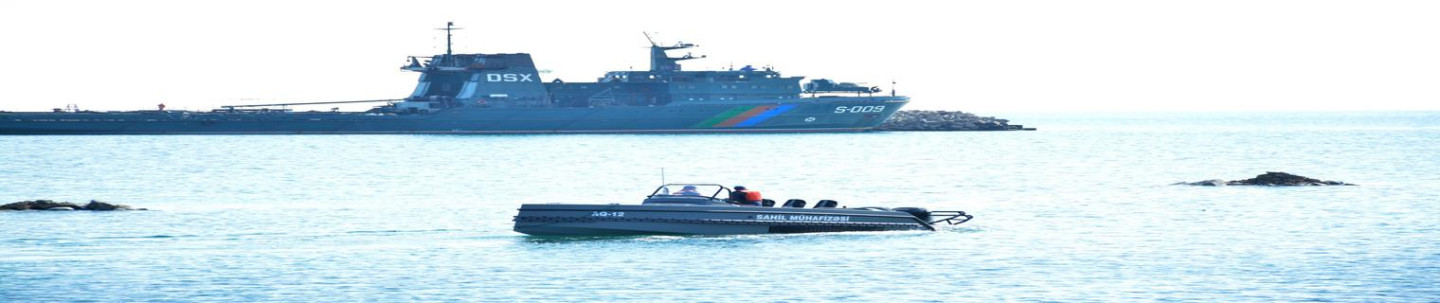
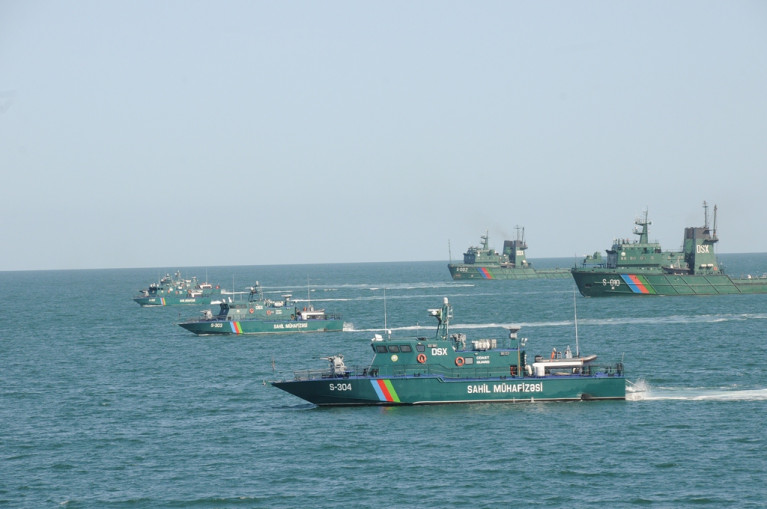
According to the “Regulation on the State Border Service of the Republic of Azerbaijan,” approved by Presidential Decree No. 823 of 12 December 2002, the unified system of the State Border Service comprises its central apparatus and structural units, including border troops, coast guard, rapid response forces, special air operations units, border control units, military aviation and naval units, as well as other specialized military units and institutions. These also include special-purpose educational institutions, training centers, research institutes, cultural and educational organizations, communication services, construction and maintenance divisions, logistics units, medical services, publishing and printing units, and information-computing facilities. The State Border Service carries out its functions directly and through its subordinate units.
Over the years, the Service’s management system has been significantly enhanced, with the extensive implementation of modern radio communication and telecommunication technologies, and the establishment of satellite communication between the central apparatus and border detachments. Border control at crossing points has been aligned with international standards, and modern laboratories for document verification have been established. Personnel have been equipped with advanced technical means to ensure reliable control over individuals and vehicles crossing the state border. Integration of all border crossing points into an automated information and search system has enabled effective and strict oversight of migration processes.