
TRACECA Corridor
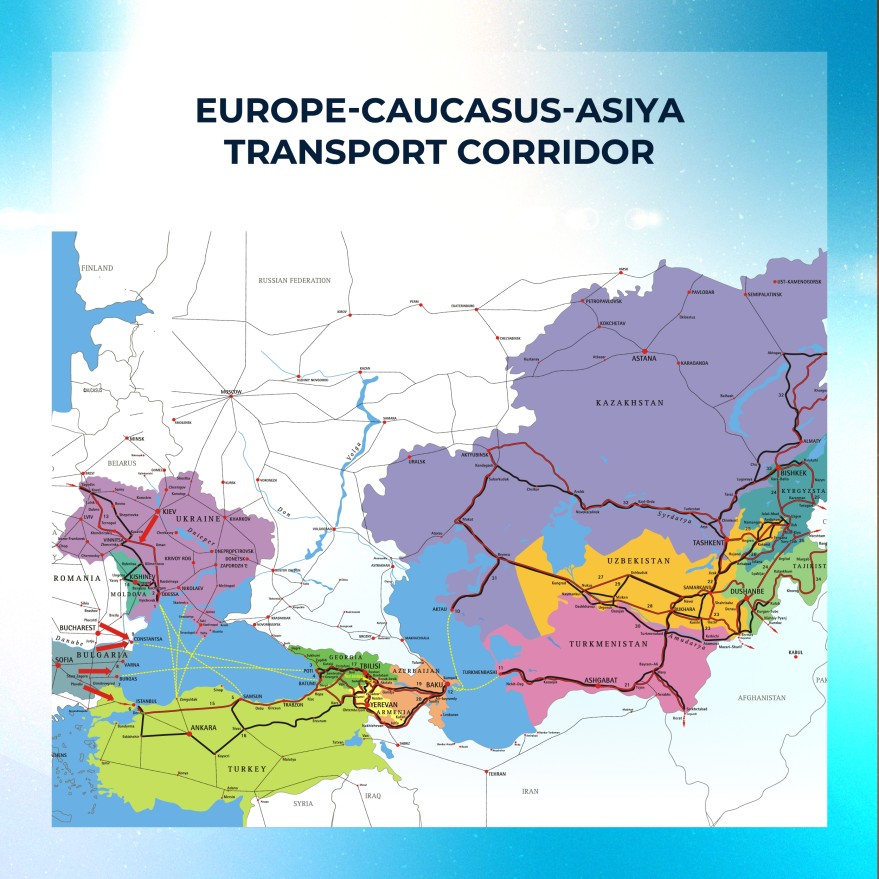
TRACECA CORRIDOR
The Transport Corridor Europe-Caucasus-Asia (TRACECA) is an internationally recognized program aimed at strengthening economic relations, trade, and transport communication across the regions of the Black Sea basin, South Caucasus, and Central Asia. Established through active cooperation based on political will and common aspirations, TRACECA has evolved into a key element in connecting Europe and Asia, offering a strategic platform for intercontinental trade and transportation.
TRACECA was formally launched in 1993 as a project by the European Union and several countries from Europe, the Caucasus, and Central Asia. The corridor spans various transport routes, including road, rail, maritime, and air, to enhance connectivity and facilitate the free movement of goods and people.
The program’s ultimate goal is to create a modern and effective transport system that enables efficient and sustainable trade between the participating countries and beyond, strengthening regional cooperation and integration.
A pivotal moment in the development of TRACECA occurred in September 1998, when 12 TRACECA countries signed the “Basic Multilateral Agreement on International Transport for Development of the Europe-the Caucasus-Asia Corridor (MLA)” at the historic Summit in Baku. The agreement was designed to promote the full geopolitical and economic potential and foster closer ties among the countries involved.
In 2009, the Islamic Republic of Iran joined the initiative, expanding the corridor’s reach and further enhancing the importance of TRACECA in connecting Europe with Central Asia and the Middle East.
Today, the TRACECA route includes the transport systems of 14 member states: Azerbaijan, Armenia, Georgia, Iran, Kazakhstan, Kyrgyzstan, Moldova, Romania, Tajikistan, Turkmenistan, Türkiye, Ukraine, and Uzbekistan.
Azerbaijan's Role in TRACECA
Azerbaijan holds a central position within the TRACECA network, thanks to its strategic location at the crossroads of Europe and Asia. The country's role as a key transport hub is bolstered by its modernized infrastructure, which links major global markets through road, rail, and maritime transport.
Azerbaijan’s transport sector has benefited significantly from its involvement in TRACECA with projects such as the Baku-Tbilisi-Kars Railway and modern port facilities like the Baku International Sea Trade Port. These investments ensure Azerbaijan's continued prominence in regional and global trade.
For Azerbaijan, TRACECA has opened avenues for deeper economic integration with countries across Central Asia, Europe, and the Middle East. The corridor is essential for increasing trade volume, fostering new investments, and enhancing regional stability.